Morton Meyers, M.D.
Morton A. Meyers, M.D., FACR, FACG, is Distinguished Professor of Radiology and Medicine and emeritus Chair of the Department of Radiology at the State University of New York (SUNY) at Stony Brook. His classic Meyers’ Dynamic Radiology of the Abdomen: Normal and Pathologic Anatomy (Springer), now in its Sixth Edition, has been hailed as “the book that revolutionized abdominal radiology”. It is widely used in medical schools and hospitals internationally, having undergone translations into Spanish, Italian, Japanese and Portuguese.
Only a handful of medical books have achieved such multiple editions. It establishes the fundamental pathways of spread and localization of cancer in the abdomen. One reviewer, postulating what three books he would take if he had to live alone on a desert island enthused: “I wouldn’t hesitate to take Meyers’ Dynamic Radiology of the Abdomen. The book would be an intellectual challenge that would make the loneliness bearable.” The book’s insights regarding cancer have been universally adopted and now serve as the basis of modern-day detection and management.
Dr. Meyers has edited a series of volumes dealing with iatrogenic diseases and a major textbook with fifty-five international contributors on staging of abdominal cancer. He founded Abdominal Imaging, a prestigious international journal, thirty-seven years ago and continues as its Editor-in-Chief. He has senior-authored over 200 articles and his contributions have been cited thousands of times in the scientific literature, indicating their seminal nature.
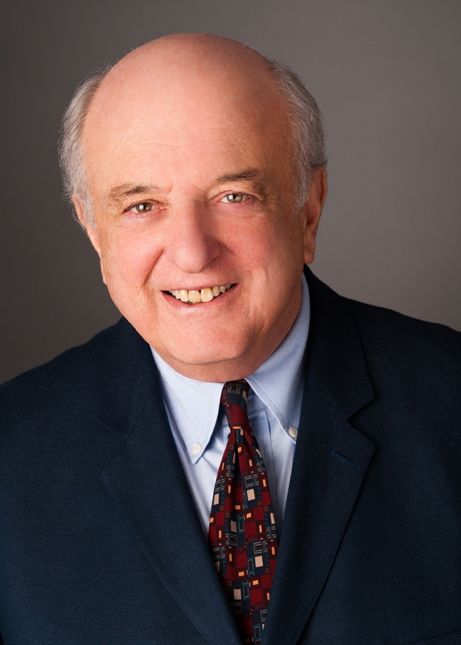
Dr. Meyers has served as Visiting Professor by invitation at over 70 medical schools in the United States, and has presented invited lectures in Britain, Scotland, Ireland, Spain, France, Belgium, the Netherlands, Germany, Switzerland, Austria, Italy, Greece, Israel, Egypt, South Africa, China, Taiwan, South Korea, Japan, Canada and Mexico. He has been awarded the Gold Medal by a number of national and international societies, as well as the Walter B. Cannon Medal.
“I have always been interested, not only in the ‘what’ but particularly the ‘how’, said Dr. Meyers. “How something came about, the lessons learned. Much of a scientific or medical education is not designed to foster creativity; rather it consists of accumulating facts without any recognition of how those facts were obtained. Understanding comes from making connections between many disparate facts. Information is not knowledge. A personal eureka moment in medicine led me to pursue the underlying factor in many modern medical advances. It’s particularly important for the interested citizen to understand the role of chance in medical discoveries for the wise allocation of national resources”, he said. Happy Accidents garnered the prestigious CHOICE Outstanding Academic Title award in 2009 for excellence in scholarship and presentation, significance of contribution to the field, and value as important treatment of subject.
“Basic to integrity of scientific research are issues of intellectual property rights, peer review, and authorship related to allocation of credit. Personal contact over years with an academic researcher who was awarded the Nobel Prize gave me a front row seat to observe a feverish race and a long-standing bitter reaction by a rival. Earlier scandals in my own field of medicine first awakened me to researchers’ coveting of peer recognition and credit for claimed intellectual property. These experiences set me on a quest to understand a profound secret of science: the powerful role of the bid for immortality in scientific research and its contribution to advances in the past century and the future. After detailed inquiries, personal interviews, and access to university archives, I was amazed at my findings. These are reported in Prize Fight: The Race and the Rivalry to be the First in Science.”
Writer's Bio
Praesent in varius felis, non accumsan lorem. Nunc consectetur metus feugiat, ultricies erat eget, tristique felis. Aliquam lobortis congue consequat. Vivamus tristique sapien at tincidunt scelerisque. Curabitur felis lacus, luctus id velit nec, luctus porttitor lacus. Morbi quis diam pretium, pellentesque metus eu, suscipit quam. Ut urna neque, elementum sit amet tortor et, ornare venenatis nulla. Nam orci enim, condimentum ullamcorper leo ultricies, dictum volutpat dolor. Aliquam quis enim arcu.Maecenas blandit pulvinar metus id rhoncus. Suspendisse potenti. Aliquam erat volutpat. Quisque ligula ligula, dapibus scelerisque
Suspendisse potenti. Aliquam erat volutpat. Quisque ligula ligula, dapibus scelerisque ipsum quis, tempor tristique lectus. Pellentesque eu placerat ligula, in rhoncus nibh. Etiam id nulla scelerisque, pellentesque odio nec, aliquam tortor. Aliquam erat volutpat. Donec placerat neque malesuada, ultricies eros sed, faucibus quam. Aliquam lacus turpis, dictum facilisis tristique posuere, fringilla in erat. Integer nec laoreet nunc. Donec ultricies volutpat justo, vel volutpat nunc. Cras sodales facilisis lacus, eget facilisis ligula venenatis quis. Morbi vulputate enim arcu, eget convallis dolor consectetur eget. Mauris quis imperdiet ipsum, non dapibus libero.